
Understanding Your Hair After 40: A Complete Hair Care Guide for Healthy, Strong Hair
Aging does not weaken hair.
Misunderstanding hair does.
After the age of 40, many people experience hair fall, dryness, thinning, frizz, or loss of texture. Most assume this is “inevitable aging.” In reality, the majority of these issues come from continuing routines designed for younger hair.
This guide explains how hair changes after 40, what it truly needs, and how to care for it gently, consistently, and effectively — without overloading products or forcing results.
How Hair Changes After 40 (The Real Science)
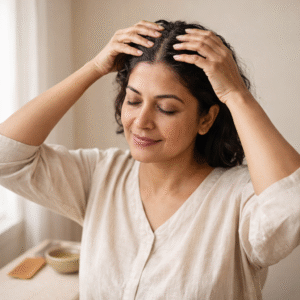
After 40, hair becomes more sensitive and selective, not weak.
Here’s what naturally happens:
-
The hair growth cycle slows slightly
-
Scalp produces less natural oil
-
Hair fibre becomes finer and drier
-
Hair reacts more strongly to stress, heat, and product overload
Because of these changes, hair needs:
-
gentler cleansing
-
better moisture protection
-
consistent nourishment
-
fewer but smarter products
Trying to “fix” hair aggressively at this stage often backfires.
The Biggest Mistake After 40
The most common reason for hair problems after 40 is this:
Using routines meant for 20s and 30s hair.
Heavy shampooing, skipping oiling, frequent heat styling, strong serums, and constant experimentation strain hair that now needs stability.
After 40, hair responds best when we work with the body, not against it.
Step 1: Pre-Wash Scalp Oiling (Essential After 40)
Why Oiling Is Important
Pre-wash oiling is not optional after 40. It helps:
-
Support the slower hair growth cycle
-
Improve blood circulation to hair follicles
-
Reduce stress-related hair shedding
-
Protect the scalp from shampoo-induced dryness
Without oiling, cleansing becomes too stripping for mature hair.
How Often to Oil
-
2 times per week only
-
More frequent oiling does not improve results
Correct Way to Oil
-
Quantity: 1 to 1.5 teaspoons
-
Apply only on scalp and roots
-
Massage gently using fingertips (never nails)
-
Massage time: 3–5 minutes
-
Leave for 30–90 minutes
-
Wash off
Avoid These Common Mistakes
-
Overnight oiling
-
Aggressive massage
-
Mixing multiple oils
-
Applying heavy oil layers
Which Oils Are Suitable
-
Yeka Moringa Hair Oil
-
Or light, cold-pressed oils like coconut (small quantity), almond, or sesame
The oil should nourish follicles — not clog them.
Step 2: Hair Washing Routine After 40
How Often to Wash Hair
-
2–3 times per week
-
Oily scalp: alternate days
-
Dry scalp: twice a week
Over-washing strips moisture. Under-washing leads to scalp imbalance.
Correct Shampoo Method
-
Dilute shampoo with water
-
Apply only on the scalp
-
Massage gently
-
Let the foam cleanse the hair lengths while rinsing
Avoid:
-
Rubbing hair lengths
-
Twisting or squeezing wet hair
Conditioner Is Non-Negotiable After 40
Conditioner protects the hair fibre and prevents breakage.
How to use:
-
Apply from mid-length to ends
-
Leave for 2–3 minutes
-
Detangle gently with fingers
-
Rinse well but gently
Step 3: Post-Wash Leave-In Care (Oils, Not Serums)

Why Natural Oils Are Better Than Daily Serums
Most commercial serums:
-
Are silicone-based
-
Coat the hair instead of nourishing it
-
Block moisture entry over time
-
Create styling dependency
Natural oils:
-
Penetrate the hair fibre
-
Seal moisture naturally
-
Reduce frizz without coating
-
Improve hair texture long-term
Serums may be used occasionally for events, not daily care.
What to Use
-
Yeka Golden Glow Oil
-
Or any light natural oil blend
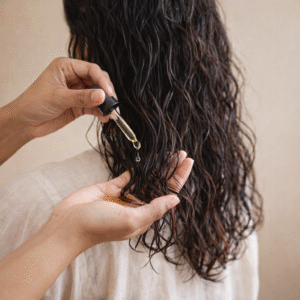
How to Apply Leave-In Oil
-
Hair should be damp, not dripping wet
-
Take 2–3 drops only
-
Rub between palms
-
Apply to mid-length and ends
-
Scrunch gently for curly or wavy hair
Never apply leave-in oil on the scalp.
Step 4: Hair Type–Specific Care After 40
Different hair types need different approaches — forcing one routine causes damage.
Curly or Wavy Dry Hair
-
Conditioner every wash
-
Leave-in oil is essential
-
Avoid dry brushing
-
Avoid heat styling
Goal: soft, healthy curls — not forced straightness.
Straight but Dry Hair
-
Light scalp oiling before wash
-
Conditioner on ends
-
Minimal heat exposure
-
Ends protection is critical
Oily Scalp with Thin Hair
-
Very light oiling before wash
-
Wash on alternate days
-
Only 1 drop oil on ends
-
Avoid tight hairstyles
Dry, Damaged, Frizzy Hair (Heat History)
-
Strict no-heat phase for 6–8 weeks
-
Temporary frizz is part of recovery
-
Hair fall here is usually breakage, not permanent loss
Step 5: Internal Nourishment Matters More After 40
Hair health after 40 reflects internal nourishment strongly.
Daily Intake Support
-
Adequate protein (dal, curd, paneer, eggs)
-
Healthy fats (nuts, seeds, ghee)
-
Warm, cooked meals
-
Proper water intake
Supplements
-
Hair gummies: 1 per day is sufficient
-
Avoid combining multiple supplements
Crash dieting and skipped meals often trigger hair shedding at this age.
Step 6: Night & Daily Hair Habits
Small habits protect hair daily:
-
Keep hair loosely braided or in a loose bun at night
-
Use cotton or silk pillowcases
-
Never sleep with wet hair
-
Avoid tight ponytails and hairstyles
What Results Can You Expect? (Realistic Timeline)
Hair heals slowly but permanently when treated correctly.
-
2–3 weeks: hair fall reduces
-
4–6 weeks: texture improves
-
2–3 months: density stabilises
Consistency matters more than speed.
The Core Truth About Hair After 40
After 40, hair does not need:
-
force
-
aggressive treatments
-
frequent styling
-
too many products
It needs:
-
understanding
-
nourishment
-
patience
When hair is cared for calmly, it responds calmly.
Final Thought
Aging hair is not a problem to fix.
It is a phase to support wisely.
When you stop fighting your hair and start understanding it,
healthy hair becomes natural again.
Leave a Reply