
Fragrance and Kids Skin: Why Smell Is Not a Sign of Safety
(YEKA — Kids Skincare Truth Series)
Introduction
Many parents associate a pleasant smell with cleanliness and care.
A product that smells nice often feels more comforting, more effective, and more complete.
But when it comes to children’s skin, smell is not a measure of safety.
In fact, fragrance is one of the most common and overlooked triggers of skin irritation in children, even when no immediate reaction is visible.
This blog explains why fragrance affects kids skin differently, how irritation can develop quietly over time, and why gentler choices support long-term skin tolerance.
Why Kids Skin Reacts Differently to Fragrance
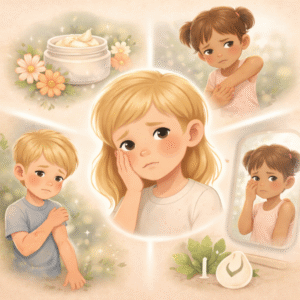
Children’s skin is thinner, more absorbent, and still developing its protective barrier.
Because of this, substances applied on the skin interact more deeply and more easily than they do on adult skin.
Fragrance components, even when they smell mild, can:
- Disrupt the skin barrier
- Trigger sensitivity gradually
- Overload a developing system
This does not always happen immediately, which is why fragrance-related issues are often misunderstood.
Irritation Is Often Slow, Not Sudden
One of the reasons fragrance is overlooked is because reactions are rarely instant.
Instead of redness right away, parents may notice:
- Dryness developing slowly
- Patchy texture
- Occasional itching
- Skin that becomes sensitive over time
This often leads to confusion:
“We’ve been using this product for months. Why is the skin reacting now?”
The answer is usually cumulative exposure, not sudden intolerance.
Why “Mild-Smelling” Is Still Fragrance
A product does not need to smell strong to contain fragrance.
Even light scents are added to:
- Improve user experience
- Mask natural ingredient odours
- Create brand identity
For adult skin, this may be manageable.
For kids skin, repeated exposure, even to mild fragrance, adds unnecessary burden.
Children’s skin does not need to smell like anything to be healthy.
The Common Misunderstanding: Smell Means Clean
Many parents associate soap smell with hygiene and fresh fragrance with cleanliness.
But clean skin:
- Does not need added scent
- Does not need to smell soapy
- Feels comfortable, not perfumed
The absence of fragrance does not mean a product is ineffective.
Often, it means it is gentler.
Why Fragrance-Free Supports Skin Tolerance
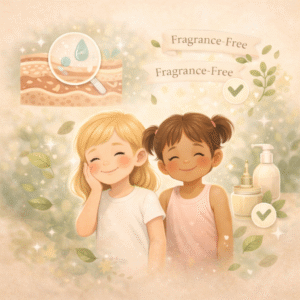
When fragrance is reduced or avoided:
- The skin barrier remains more stable
- Sensitivity risk decreases
- Skin adapts more easily to its environment
Over time, this supports:
- Better tolerance
- Fewer unexplained reactions
- Calmer skin behaviour
This is especially important in childhood, when skin is still learning what to accept and what to reject.
What Parents Often Observe When Fragrance Is Removed
Many parents notice quiet but meaningful changes such as:
- Less dryness
- Reduced itching
- Fewer sudden skin reactions
- Skin that feels more balanced
These improvements often happen without dramatic treatment or intervention.
Fragrance Is Not Necessary for Childcare
Fragrance is added for adults, not for children.
Kids:
- Do not benefit from scented skin
- Do not require perfumed products
- Do not associate smell with cleanliness
Choosing low-fragrance or fragrance-free options respects how children’s skin naturally functions.
What Parents Should Remember
Fragrance does not make a product safer, better, or more effective for kids.
It only adds:
- Extra exposure
- Extra processing for the skin
- Extra risk without clear benefit
When in doubt, simpler is safer.
Final Takeaway
A pleasant smell may feel reassuring, but it is not a sign of skin safety.
For children, the safest skincare is often:
- The least scented
- The least complex
- The most respectful of natural skin development
By choosing gentler options, parents allow kids skin to grow tolerant, balanced, and resilient over time.
Next in the YEKA Kids Skincare Truth Series
Why kids don’t need separate face skincare products
Leave a Reply