
Is Hair Fall After Illness Permanent?
Hair fall after sickness can feel frightening.
One day, you are finally recovering.
The fever is gone. Strength is slowly returning.
And then suddenly, your hair begins to shed.
Clumps on the pillow.
More strands in the shower drain.
A quiet panic sets in.
You begin to wonder if the illness damaged your hair forever.
This blog is for that moment.
Not to alarm you.
Not to sell fear.
But to explain gently, truthfully, and completely what is really happening inside your body.
At Yeka, we believe healing begins with understanding.
Hair Fall After Illness Is Common, But Poorly Explained
Hair fall after illnesses such as typhoid, dengue, viral fever, COVID, or prolonged infections is extremely common.
Yet most people are never warned about it.
Medical care rightly focuses on survival and recovery. Hair is considered non-essential in emergencies. But for the person experiencing it, hair fall feels deeply personal.
It affects confidence, identity, and emotional safety.
The most important truth to know is this:
Hair fall after illness is usually temporary.
It is not permanent hair loss.
It is shedding.
Understanding this difference changes everything.
Why Illness Triggers Hair Fall
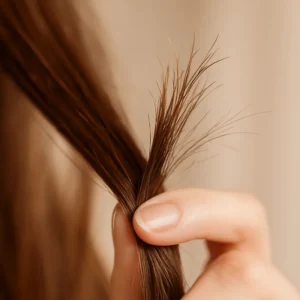
To understand post-illness hair fall, we need to understand how the body prioritises survival.
1. The Body Enters Survival Mode
During high fever or long infections, the body shifts its priorities.
Energy is directed toward:
• Fighting infection
• Protecting vital organs
• Repairing damaged tissues
• Maintaining immunity
Hair growth is not essential for survival.
So the body temporarily redirects energy away from hair follicles.
This is not failure.
It is biological intelligence.
2. Fever and Stress Shock the Hair Cycle
Hair grows in cycles:
• Growth phase (Anagen)
• Resting phase (Telogen)
• Shedding phase (Exogen)
High fever, inflammation, emotional stress, and exhaustion can shock the system, pushing many hair follicles into the resting phase at the same time.
Hair does not fall immediately.
It rests first.
Then sheds weeks later.
Why Hair Fall Starts Weeks After Recovery
This delay causes the most fear.
Many people ask why hair fall begins a month after the illness ends.
When follicles enter the resting phase due to stress:
• They remain attached for 6–12 weeks
• Shedding begins later to make space for new growth
This delayed shedding is medically known as Telogen Effluvium.
It is a temporary response, not permanent damage.
The Nutrition Factor Often Overlooked
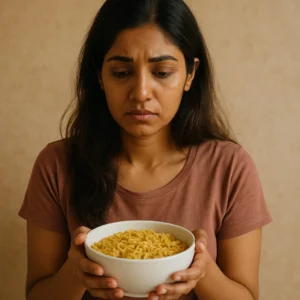
Illness rarely affects just one system.
During sickness, many people experience:
• Poor appetite
• Weak digestion
• Reduced nutrient absorption
• Restricted diets
This can lead to temporary deficiencies in:
• Protein
• Iron
• Zinc
• B-vitamins
Hair follicles are highly sensitive to nutritional signals. When nutrients are low, hair chooses safety over growth.
This is feedback, not punishment.
Is Post-Illness Hair Fall Permanent?
For the vast majority of people, the answer is no.
Hair roots remain alive.
Growth has not stopped.
It has paused.
Post-illness hair fall does not scar or destroy follicles. In fact, new hair often begins growing even while old hair is shedding.
You simply cannot see it yet.
What Makes Recovery Slower
Panic often delays healing.
These habits can slow recovery:
• Frequently switching products
• Aggressive oiling or massages
• Harsh scalp treatments
• Excessive washing
• Constant mirror checking
• Emotional stress and self-blame
Hair does not recover under pressure.
Calm accelerates healing.
How to Recover Gently
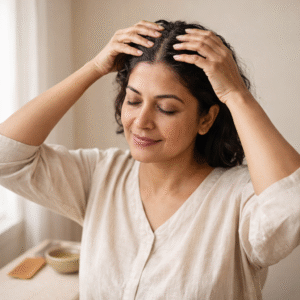
Healing must be internal first.
Hair follows the body.
1. Warm, Nourishing Food
Digestion is still healing after illness.
Choose food that is:
• Warm
• Simple
• Easy to digest
Dal, rice, vegetables, curd, ghee, soups support recovery quietly.
2. Consistent Daily Protein
Hair is made of protein.
Choose what suits your body:
• Lentils
• Curd
• Paneer
• Eggs
• Nuts and seeds
Consistency matters more than extremes.
3. Gentle Oil Massage
Oil is not a miracle cure, but gentle oiling helps by:
• Calming the nervous system
• Supporting scalp circulation
• Offering emotional grounding
Massage slowly.
No force.
No urgency.
4. Emotional Rest Is Essential
Post-illness anxiety and fear keep the body in stress mode.
Hair grows when the body feels safe again.
Rest well.
Sleep deeply.
Trust the process.
How Long Does Recovery Take
For most people:
• Shedding stabilises in 2–3 months
• New growth appears in 3–4 months
• Density improves gradually after
This timeline is normal.
Healing remembers.
It does not rush.
A Quiet Yeka Truth
At Yeka, we see hair as a reflection of:
• Physical nourishment
• Emotional safety
• Nervous system balance
Healing finishes what survival starts.
That is why our approach is always gentle, never aggressive.
Where Yeka Stands
Yeka was created to restore trust in the body’s rhythm.
Our philosophy is rooted in:
• Understanding over fear
• Nourishment over force
• Care as a sacred act
Even our rituals extend beyond self-care into food-sharing, because feeding the body in any form is healing.
If You Are Experiencing Hair Fall After Illness
You did nothing wrong.
Your body chose life first.
Now it is rebuilding.
Hair will follow.
Be patient.
Be gentle.
Be nourished.
You are not losing your hair.
You are recovering your health.
And that is always the right direction.
— Yeka
Leave a Reply